- August 13, 2025
- Weight Loss
Why Focus on Weight Loss and Fitness Together?
Many people make the mistake of focusing on weight loss alone, thinking it’s all about eating less. But fitness plays an equally important role. When you combine smart eating with regular physical activity, you:
- Burn more calories efficiently
- Build muscle and boost metabolism
- Improve mood and reduce stress
- Maintain results for the long term
If you want results that last, you need both healthy weight loss habits and a fitness plan that fits your lifestyle.
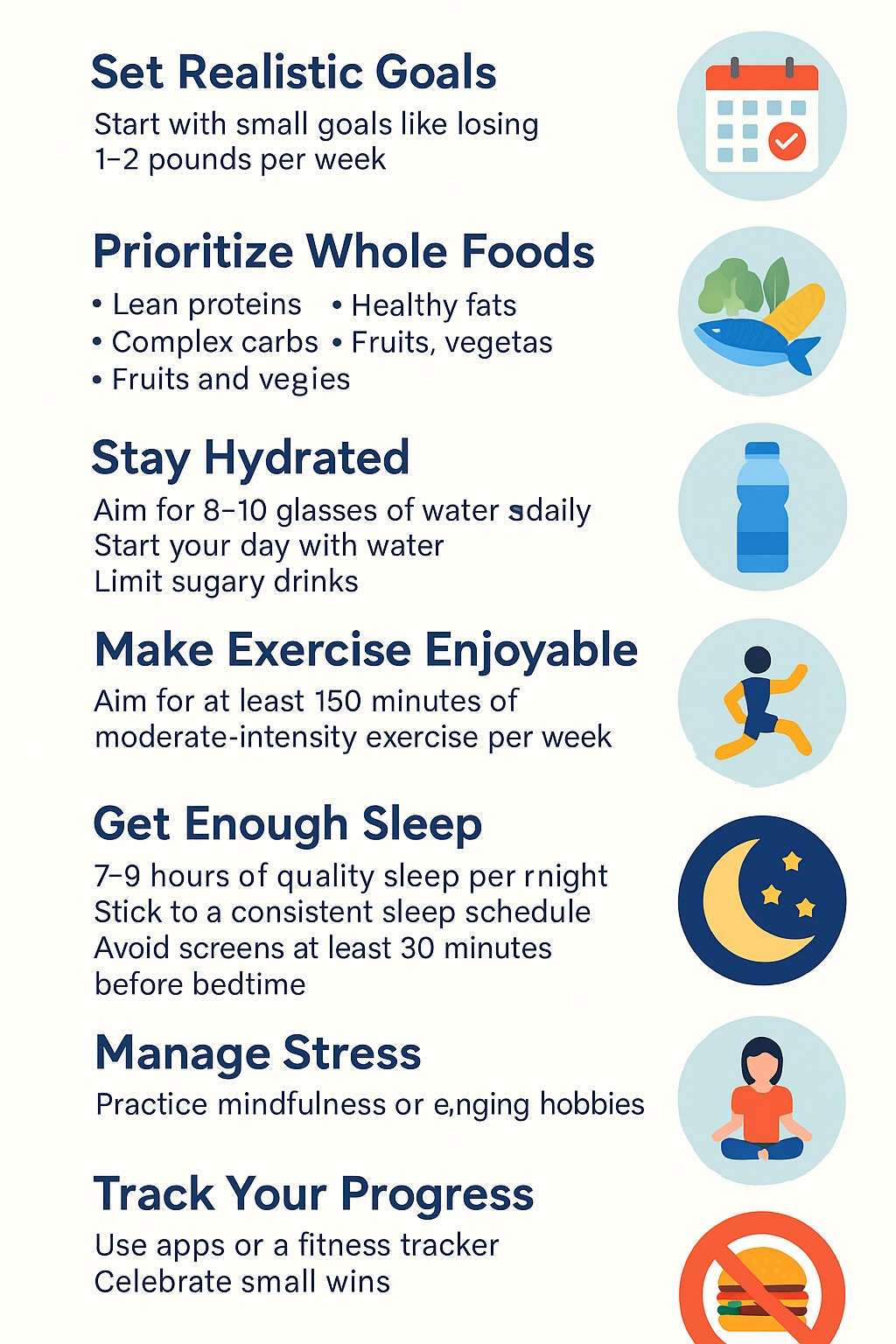
1. Set Clear, Realistic Goals
Before jumping into any new plan, be clear about what you want to achieve.
- Instead of aiming to “lose weight fast,” aim for 1–2 pounds per week.
- Define your reasons—better health, increased energy, improved self-confidence.
- Write down your goals and break them into short-term (monthly) and long-term (6–12 months) milestones.
Pro Tip: Keep progress photos and a journal. Tracking changes in your strength, stamina, and mood is just as important as the number on the scale.
2. Eat for Nourishment, Not Just Weight Loss
A huge part of how to lose weight naturally comes down to nutrition. You don’t need extreme diets; you need balance.
- Prioritize whole foods: Vegetables, fruits, lean proteins, whole grains, and healthy fats.
- Limit processed foods: Avoid foods high in sugar, refined flour, and unhealthy oils.
- Practice portion control: Use smaller plates, eat slowly, and stop when you’re about 80% full.
Sample Plate Formula:
- 50% vegetables and leafy greens
- 25% lean protein (chicken, turkey, tofu, fish)
- 25% complex carbs (sweet potatoes, quinoa, oats)
3. Stay Hydrated
Water is a weight loss hero. It keeps you full, aids digestion, and helps your body burn fat.
- Drink a glass of water before meals to prevent overeating.
- Replace sodas and sugary drinks with water or herbal tea.
- Aim for 8–10 glasses daily (more if you exercise heavily).
4. Build a Beginner-Friendly Fitness Routine
When it comes to fitness tips for beginners, consistency matters more than intensity in the beginning. Start small and increase gradually.
Beginner Workout Plan (30–40 min, 4 days a week):
- Warm-up: 5–10 minutes of light cardio (walking, cycling, or jumping jacks)
- Strength training: 15 minutes (bodyweight squats, push-ups, planks)
- Cardio: 10–15 minutes (brisk walking, jogging, or jump rope)
- Cool-down: 5 minutes stretching
5. Strength Training is Key for Long-Term Results
Many beginners avoid strength training, thinking cardio alone will help them lose weight. The truth is, lifting weights or doing bodyweight exercises builds muscle, and muscle burns more calories—even at rest.
Beginner Strength Tips:
- Start with bodyweight exercises: squats, lunges, push-ups, and planks.
- Use resistance bands or light dumbbells.
- Train 2–3 times per week, focusing on different muscle groups.
6. Cardio for Fat Loss
Cardio helps burn calories and improves heart health.
- Low-intensity steady-state cardio (LISS): Walking, swimming, or cycling at a steady pace for 30–60 minutes.
- High-intensity interval training (HIIT): Short bursts of intense exercise followed by rest (20–30 minutes total).
For healthy weight loss habits, a mix of both is ideal.
7. Focus on Healthy Weight Loss Habits
Losing weight isn’t just about workouts and diet—it’s about lifestyle.
- Plan meals ahead: Reduces the temptation for unhealthy choices.
- Get enough sleep: 7–9 hours helps regulate hunger hormones.
- Manage stress: Chronic stress can trigger overeating.
- Limit alcohol: It adds empty calories and slows fat burning.
8. How to Lose Weight Naturally Without Dieting
If you want a sustainable plan:
- Eat slowly and chew thoroughly—this helps control appetite.
- Add more protein to your meals to stay fuller longer.
- Increase daily movement (walk more, take stairs, stretch often).
- Reduce late-night snacking.
9. Stay Consistent and Patient
The biggest mistake beginners make is expecting overnight results. Remember:
- Small, consistent actions lead to big changes over time.
- Focus on progress, not perfection.
- Celebrate non-scale victories—better mood, increased stamina, improved sleep.
10. Common Mistakes to Avoid
- Skipping meals (slows metabolism)
- Overtraining without rest days
- Relying on supplements instead of real food
- Following fad diets that cut out entire food groups
Sample 7-Day Beginner Weight Loss & Fitness Plan
Day 1:
- Breakfast: Oats with berries & almonds
- Lunch: Grilled chicken salad with olive oil dressing
- Dinner: Baked salmon with quinoa & broccoli
- Workout: 30 min brisk walk + 10 min stretching
Day 2:
- Breakfast: Greek yogurt with honey & banana
- Lunch: Whole grain wrap with turkey & veggies
- Dinner: Stir-fry tofu with brown rice
- Workout: 20 min strength training + 15 min cycling
Day 3:
Active rest day—light walking or yoga
Day 4:
- Breakfast: Scrambled eggs with spinach
- Lunch: Lentil soup with whole wheat bread
- Dinner: Grilled fish with sweet potato & salad
- Workout: HIIT (20 min) + core exercises
Day 5:
- Breakfast: Smoothie (spinach, banana, protein powder)
- Lunch: Quinoa bowl with chickpeas & avocado
- Dinner: Chicken stir-fry with mixed veggies
- Workout: 30 min jogging or cycling
Day 6:
- Breakfast: Cottage cheese with berries
- Lunch: Tuna salad with boiled eggs
- Dinner: Veggie curry with brown rice
- Workout: 20 min strength training + 10 min yoga
Day 7:
Active rest day—light swimming, walking, or stretching
Frequently Asked Questions (FAQs)
Start with 3–4 days a week and gradually increase to 5–6 days as your fitness improves.